Trials and Triangulations: Analyzing Aggregation Sensitivity in Event Data on Political Violence
Abstract
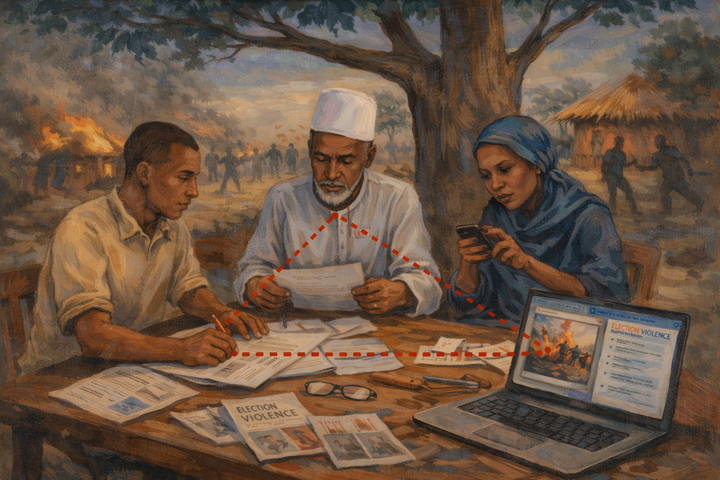
Event datasets are indispensable for advancing research and informing policy in international studies. However, the process by which researchers aggregate information from multiple reports into a single event record remains neglected. Responding to calls for greater data transparency, we emphasize the importance of compiling datasets at the event report level and employing systematic, replicable aggregation procedures. We argue that existing aggregation methods, such as relying on median or maximum values, are insufficient for handling complex datasets on international relations and political violence. To address this issue, we develop three distinct aggregation models tailored to more complicated data structures. Using novel event report-level data from the Modes and Agents of Election-Related Violence in Côte d’Ivoire and Kenya (MAVERICK) dataset, we conduct two illustrative analyses using pre-existing research designs to highlight the analytical benefits of assessing aggregation sensitivity. The study demonstrates that aggregation choices can have far-reaching consequences and underscores the need to account for aggregation sensitivity when collecting, selecting, and analyzing event data in international studies.
Sebastian van Baalen
Associate Professor of Peace & Conflict Research
My research interests include the dynamics of violence and civil war.