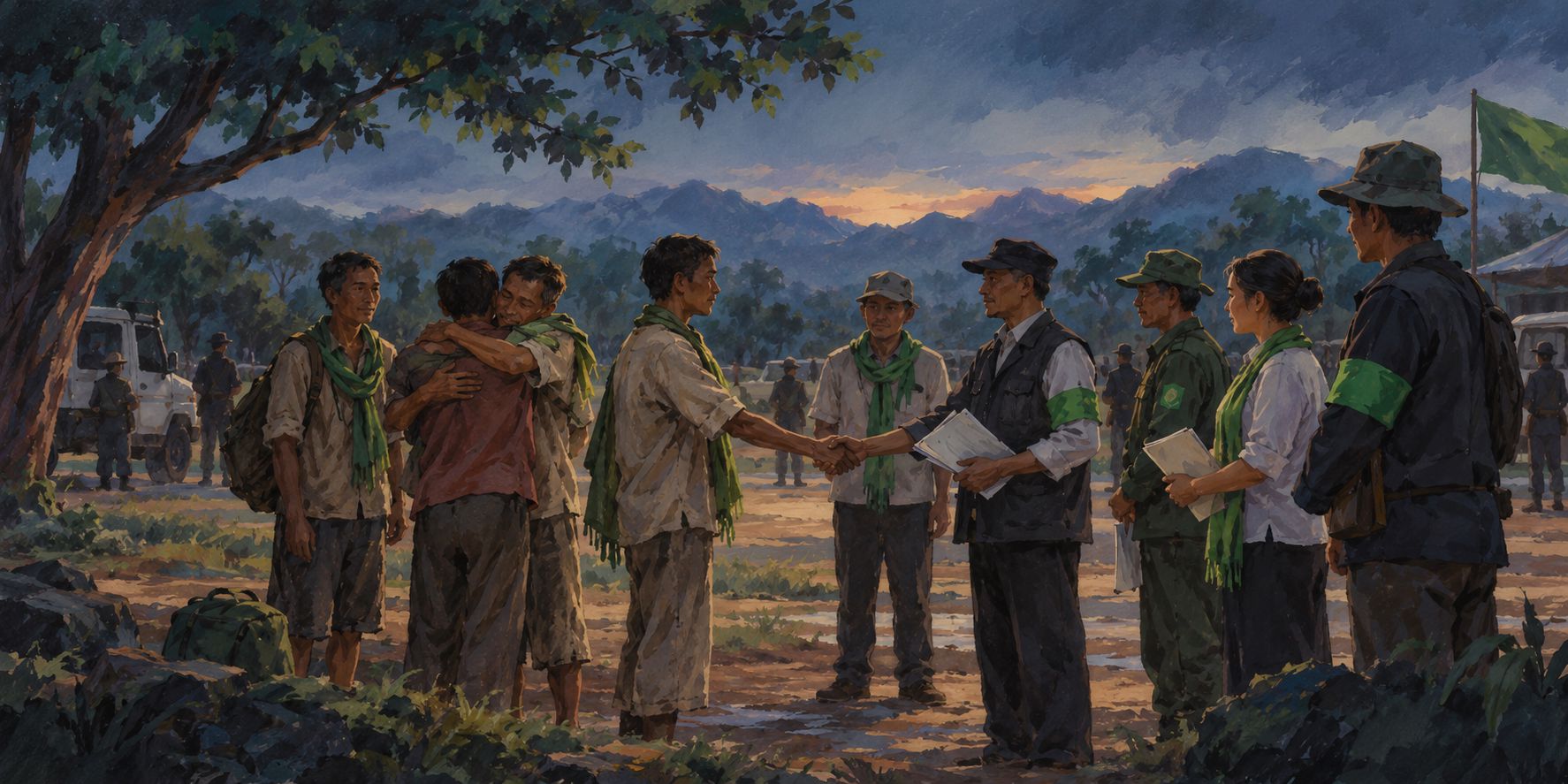
 Photo: Chat GPT
About the project
War is usually understood as a struggle to defeat the enemy. Yet warring parties sometimes cooperate, even when making deals with the enemy is unpopular and dangerous. A particularly striking form of such cooperation is the release and exchange of prisoners. Already during the American Civil War, the Union and the Confederacy exchanged captured soldiers despite fearing that they would re-enlist and prolong the war. In Russia’s war against Ukraine, the parties have exchanged thousands of prisoners, in swaps described as the only notable progress in talks between the two sides. Elsewhere, as in Colombia and Yemen, prisoner release talks have collapsed. Under what conditions do warring parties release and exchange prisoners in war?
Despite the importance of prisoner releases for detainees and their families, and their frequent role as a precondition for peace negotiations, there is almost no comparative research on why and when they happen. Prisoner releases are also ideal for studying cooperation between enemies more broadly. Like ceasefires and humanitarian corridors, they require verifiable coordination between opposing sides, and because they carry real political and military costs, they offer a hard test for theories of wartime cooperation.
By explaining why enemies cooperate on prisoner releases even as the space for peace negotiations narrows, the project advances knowledge on cooperation in war and equips policymakers and humanitarian actors to reduce suffering in ongoing conflicts.
Research design
The project combines quantitative and qualitative methods. It constructs the Prisoners in War Exchange and Release (POWER) dataset, the first global event dataset on prisoner releases and exchanges in armed conflicts between 1989 and 2025, and analyzes it statistically. These analyses are combined with semi-structured interviews with prisoner release mediators and facilitators, which shed light on the mechanisms behind successful deals as well as on negotiations that failed before they became public. The POWER dataset will be made publicly available upon completion.
Advisory board
The project’s advisory board brings together academic and practical expertise on mediation, peace negotiations, international law, war studies, and nonstate armed group behavior.